Google is Paying to Build AI Agents
Google is investing heavily in AI agent infrastructure. Here is what that means for builders.
Google is investing heavily in AI agent infrastructure. Here is what that means for builders.
Free resources that teach AI better than most paid courses. Save your money.
Claude usage analytics tool breakdown — track tokens, costs, and optimize your AI spend.
MCP connector from Higgsfield enables mass ad creative generation with AI agents.


Another ChatGPT trend is here People are turning their profiles into cute crayon-style cartoons using ChatGPT. The idea is simple. Upload a screenshot of your profile, paste the prompt, and let the model redraw the whole page as if it was made with crayons on white paper. The result keeps the profile layout, but turns the details into a playful handmade version filled with sweet childlike elements. It works because the output feels personal, nostalgic, and instantly shareable. Would you try this with your own profile?

DeepSeek's Liang Wenfeng identifies continuous learning as the key missing piece on the path to AGI, and this article argues it cannot live inside model weights due to economics, opacity, and vendor lock-in. Instead, durable agent memory should be stored in portable, inspectable formats like markdown and git, with a cognitive runtime handling retrieval, promotion, decay, and identity separation. The article warns that naive summarized memory can make agents overconfident about wrong facts, proving that how memory is structured matters as much as what it stores.
See more
This paper benchmarks LLM personalization capabilities through a Bayesian Persuasion framework applied to sales outreach, releasing SDR-Bench with 6,279 customer success stories across 22 industries. Frontier LLMs and deep-research agents show a consistent personalization plateau, with no model statistically separating successful from unsuccessful outreach on a Fortune 100 cohort. A field deployment with 12 sales reps validated the framework, with 48% of model-generated content rated immediately useful and senior-expert agreement at Pearson 0.82.
See more
U.S. export controls now can shut off access to frontier AI models overnight, as demonstrated when the Commerce Department suspended Anthropic's Fable 5 and Mythos 5 for three weeks via unpublished letters. Meanwhile, Chinese open-weight models like Kimi K3, GLM-5.2, and DeepSeek are closing the capability gap to months rather than years and now process roughly 61% of tokens on OpenRouter. Companies must weigh U.S. export-control risk against Chinese-model legal exposure, as both come with distinct compliance tripwires with no neutral third option.
See more
Stack Overflow Blog's podcast features Evan You (VoidZero) and Dane Knecht (Cloudflare) discussing Cloudflare's acquisition of VoidZero and its implications for JavaScript development. The conversation covers how corporate partnerships can help open-source projects stay maintained and sustainably monetized. They also explore how Cloudflare's distributed systems are improving developer experience in Vite and the broader JS ecosystem.
See more
Cisco Foundation AI released Antares, a family of open-weight small language models (350M and 1B) that locate known vulnerabilities inside real codebases. Antares-1B outperforms much larger models like GLM-5.2 (753B) and Gemini 3 Pro on the Vulnerability Localization Benchmark, with post-training providing nearly all capability. A full 500-task sweep costs under a dollar on a single H100 in 13 minutes, compared to $141 for GPT-5.5.
See more
GitHub's MCP Server now supports the upcoming MCP specification ahead of its official release on July 28, 2026. The key change is that the MCP protocol is transitioning to a stateless core architecture. This update enables developers building AI agents and tools to integrate with GitHub via the latest protocol standard before it becomes official.
See more
Laguna S 2.1 from Poolside is now available on Vercel's AI Gateway in free and paid versions, offering an open-weight Mixture-of-Experts model with up to 1M token context. The model specializes in agentic coding and long-running tasks, scoring 78.5% on SWE-bench Multilingual and 70.2% on Terminal-Bench 2.1. Developers can integrate it via the AI SDK with unified API features including usage tracking, failover, and BYOK support at provider pricing with no markup.
See moreLLM-INSTRUCT won the UZH Shared Task at ArgMining 2026 for paragraph-level argument mining in UN/UNESCO resolutions using open-weight models up to 8B parameters. The system narrows candidate tags via dense retrieval, applies constrained decoding, escalates uncertain cases to three-agent debate, and validates JSON schema output. Key lesson: reducing the decision space before generation improves both accuracy and robustness.
See more
Tabular foundation models can predict missing spreadsheet columns zero-shot, analogous to how LLMs complete text. On the TabArena benchmark, these models now outperform fully tuned gradient-boosted trees like XGBoost. The article includes an independent reproduction of the strongest open model and maps scenarios where XGBoost still holds an edge.
See moreThis paper isolates the mechanism behind the Muon optimizer's faster grokking on modular arithmetic, showing that orthogonalization (Newton-Schulz iteration) is the active ingredient while spectral-norm constraints alone provide no speedup over AdamW. Orthogonalizing optimizers reach generalization at ~3x lower spectral norm and settle into lower-norm solutions. Reducing Newton-Schulz iterations from five to one accelerates threshold crossing but makes the grokked solution fragile, while five iterations remain robust across learning rates. The authors release full training and analysis code.
See more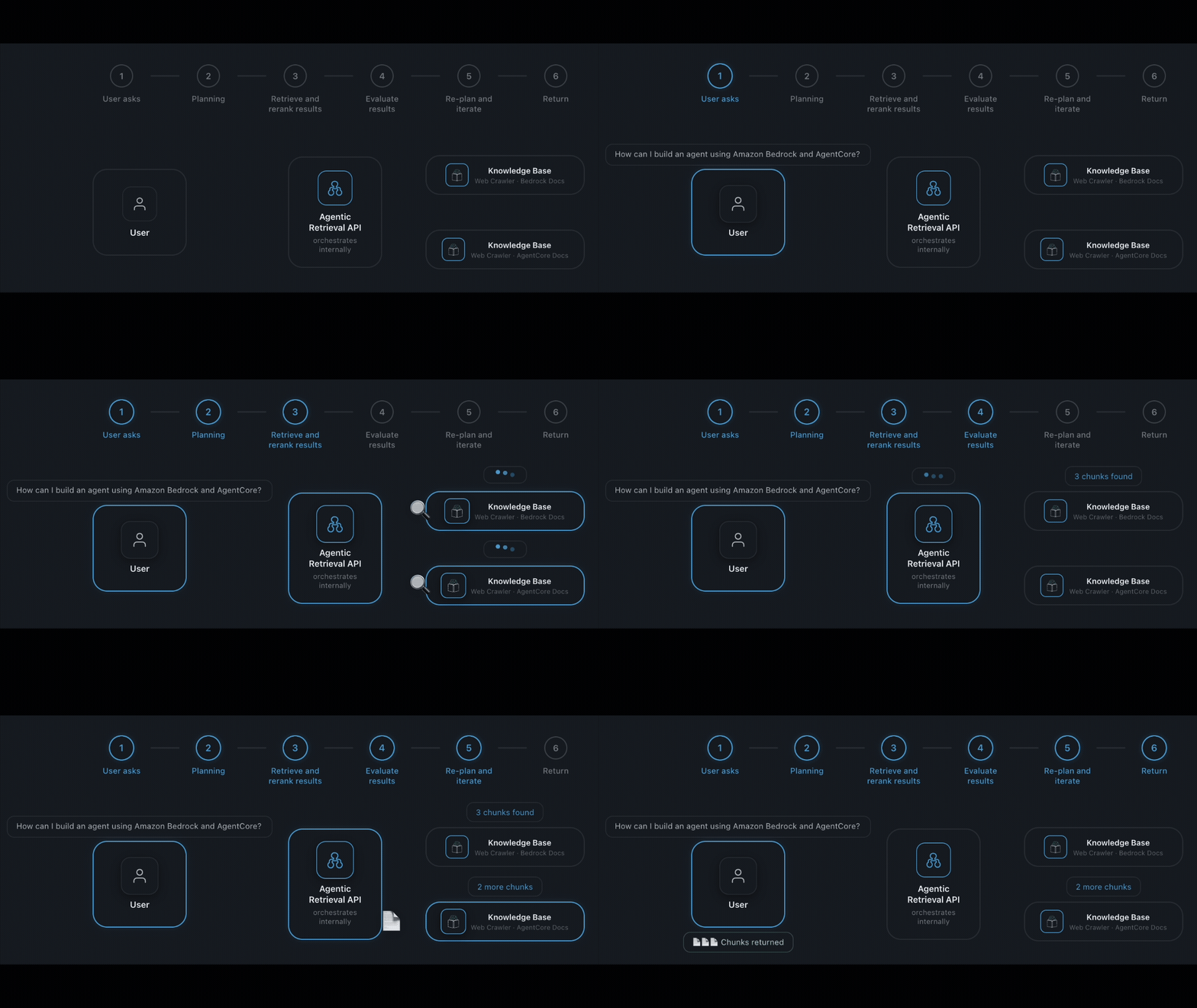
AWS introduces the AgenticRetrieveStream API for Amazon Bedrock Managed Knowledge Base, addressing shortcomings of classic retrieval on multi-part questions. The post covers request construction, trace parsing, and guidance on when to use agentic retrieval versus the standard Retrieve API. It targets developers building production RAG systems on AWS.
See more
A Chinese open-weight model triggered the worst week for chip stocks since April as investors questioned what $725B in AI capex is actually buying. Separately, an autonomous agent breached Hugging Face, and US frontier-model guardrails locked out defenders who then ran forensics on an open Chinese model. Washington simultaneously moved to restrict access to closed models, making open-weight the common winner across both market and security fronts.
See more![SkewAdam: A tiered optimizer that cuts MoE state memory by 97% (fits a 6.7B MoE on a 40GB GPU) [R]](https://preview.redd.it/1457xi9fcqeh1.jpg?width=140&height=90&auto=webp&s=879aad6df9e51a2735d91112d01518ff76ba3cbe)
SkewAdam is a new tiered optimizer that cuts optimizer state memory for Mixture-of-Experts models by 97.4%, from 50.6 GB to 1.29 GB. It allocates precision based on parameter behavior: full state for backbone, factored 2nd moment for experts, and exact 2nd moment for routers. This enables a 6.7B MoE to train on a single 40GB GPU without sacrificing convergence or router stability.
See more
A coalition including Nvidia, Meta, Microsoft, Hugging Face, and the Linux Foundation signed a letter arguing that open-weight models deserve a central place in US AI strategy. The group contends downloadable, inspectable, modifiable systems should not be treated as a defensive afterthought. This coordinated push comes as Washington debates AI regulation and open-model restrictions.
See more
AI companies including Nvidia and Mistral are urging US policymakers to avoid broad restrictions on open-weight AI models as Washington debates responses to Chinese AI advances and alleged model distillation. The industry argues that overly broad curbs could stifle innovation and competitiveness. The debate highlights tensions between national security and open-source AI development.
See more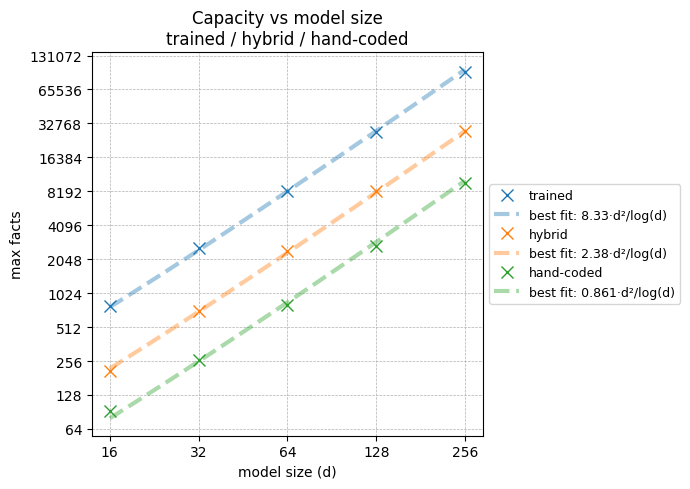
Researchers hand-coded weights for single-layer MLPs that memorize labels for two-token input sequences. The hand-coded models scale roughly linearly in memorization capacity with parameter count, matching trained models' scaling behavior. However, the scaling prefactor for hand-coded models still falls short of trained models by a significant factor, suggesting trained models use more efficient memorization strategies.
See more
A weekly link roundup covering 24 AI-related news items spanning education, employment, government policy, security, and open-source developments. Notable stories include South Korea's universal government AI chatbot, a 2.8-trillion-parameter open-source model from Moonshot AI, and multiple reports on AI-driven layoffs at Microsoft and Meta. The post offers brief one-line descriptions with outbound links but no original analysis or commentary beyond cursory observations.
See more
Hugging Face announces integration of Nunchaku 4-bit quantization for diffusion model inference into the Diffusers library. This enables more memory-efficient generation of images using diffusion models with minimal quality loss. The post targets ML engineers and product teams deploying generative AI at scale.
See more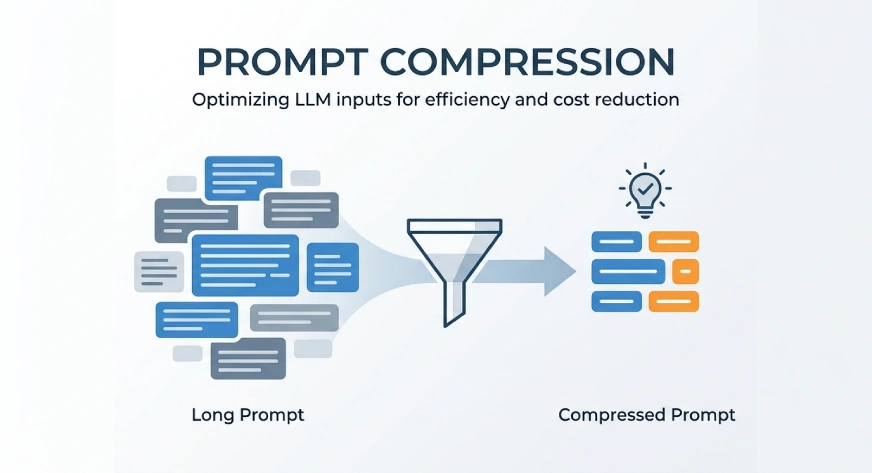
Prompt compression techniques help reduce LLM token usage, cost, and response time by trimming unnecessary information from prompts while preserving key meaning. Long prompts with instructions, documents, chat history, and tool descriptions can overwhelm models and obscure important details. The article covers methods to compress prompts effectively without losing critical context.
See more
Nvidia CEO Jensen Huang endorsed open-weight AI models, arguing that America's AI leadership should be measured by the strength of its open ecosystem rather than a single frontier model. The statement frames openness as key to spreading AI across industries and institutions. The post is a brief summary without deeper analysis or context.
See more