Google is Paying to Build AI Agents
Google is investing heavily in AI agent infrastructure. Here is what that means for builders.
Google is investing heavily in AI agent infrastructure. Here is what that means for builders.
Free resources that teach AI better than most paid courses. Save your money.
Claude usage analytics tool breakdown — track tokens, costs, and optimize your AI spend.
MCP connector from Higgsfield enables mass ad creative generation with AI agents.


Another ChatGPT trend is here People are turning their profiles into cute crayon-style cartoons using ChatGPT. The idea is simple. Upload a screenshot of your profile, paste the prompt, and let the model redraw the whole page as if it was made with crayons on white paper. The result keeps the profile layout, but turns the details into a playful handmade version filled with sweet childlike elements. It works because the output feels personal, nostalgic, and instantly shareable. Would you try this with your own profile?

DeepSeek's Liang Wenfeng identifies continuous learning as the key missing piece on the path to AGI, and this article argues it cannot live inside model weights due to economics, opacity, and vendor lock-in. Instead, durable agent memory should be stored in portable, inspectable formats like markdown and git, with a cognitive runtime handling retrieval, promotion, decay, and identity separation. The article warns that naive summarized memory can make agents overconfident about wrong facts, proving that how memory is structured matters as much as what it stores.
See more
The National Law Review, WashU Law, and Wickard will host a free virtual Legal AI Demo Day on August 11, 2026, featuring eight-minute live product demonstrations from nine legal technology companies. Participating tools span litigation fact management, automated timekeeping, real estate due diligence, discovery automation, privileged meeting intelligence, small-firm matter management, SEC disclosure compliance, judicial case preparation, and workers' compensation defense. Each company will demo its product in action rather than deliver conventional presentations or sales pitches.
See more
The Trump administration announced $5 billion in 'Genesis Mission' grants for AI-driven science projects, likened to the Manhattan Project in urgency. Science adviser Michael Kratsios, who lacks a science background, pitched lawmakers on a 'New Golden Age' prioritizing AI, robotics, and nuclear energy over life sciences. Together, these moves signal a major shift in US federal science funding toward AI-centric research priorities.
See more
News publishers including The Wall Street Journal are now disclosing in renewal emails that subscription prices were set by an algorithm, catching subscribers off guard. The practice raises questions about transparency, fairness, and consumer trust in algorithmic pricing for digital media subscriptions. As algorithmic pricing becomes more common across media, publishers face a tension between revenue optimization and subscriber retention.
See more
Cognition, the AI coding startup behind Devin, has acquired Poke, a conversational AI assistant you text like a friend, in a deal valued in the low nine figures. The acquisition brings Poke's casual interaction model to Devin, reflecting an industry shift where AI personality and user experience are becoming as critical as the underlying models. The deal underscores that conversational design is now a competitive moat in AI products.
See more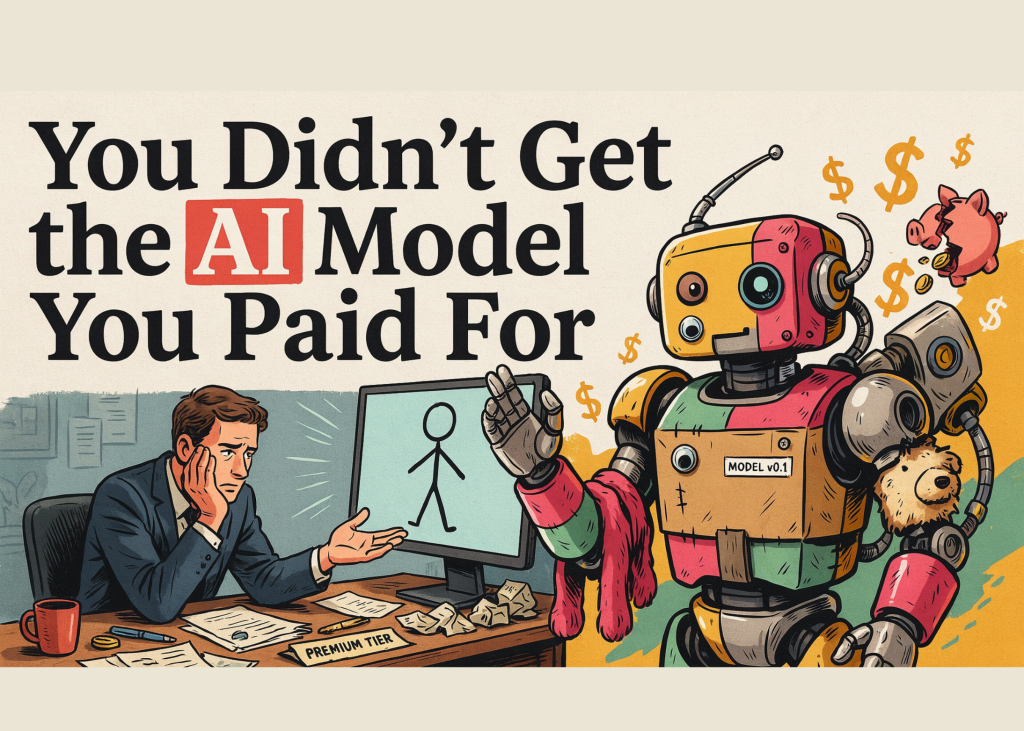
The article describes a scenario where API calls specifying a particular Claude model are silently routed to different model weights based on request classification, returning a different model identifier in the response. This raises transparency and billing concerns for developers relying on specific model behavior. The piece touches on Anthropic's potential request-routing practices without full technical detail.
See more
A former Google DeepMind employee proposes a governance framework for AI companies contracting with government entities, establishing two red lines: human control over targeting and use of force, and no untargeted AI profiling. The framework includes a seven-person Defense AI Review Body that assesses contract compliance with yearly transparency reports to prevent quiet dismantling. The author invites discussion on improving the framework as corporate governance and its potential to inform future legislation.
See more
This paper benchmarks LLM personalization capabilities through a Bayesian Persuasion framework applied to sales outreach, releasing SDR-Bench with 6,279 customer success stories across 22 industries. Frontier LLMs and deep-research agents show a consistent personalization plateau, with no model statistically separating successful from unsuccessful outreach on a Fortune 100 cohort. A field deployment with 12 sales reps validated the framework, with 48% of model-generated content rated immediately useful and senior-expert agreement at Pearson 0.82.
See more
Forrester's Wave report on Workday Services for Q2 2026 highlights a market shift: buyers now demand strategic partners who can drive continuous transformation and operationalize AI, not just deliver on-time implementations. The report identifies five key findings about how service providers are adapting to these evolving buyer expectations. The focus is on long-term platform value maximization beyond go-live.
See more
A Jefferies report warns that the AI infrastructure buildout is entering a riskier phase as hyperscalers increasingly finance massive AI investments through debt. Investors are growing concerned about rising credit risks while questions about future returns on these capital expenditures remain unanswered. The report signals a potential shift in market sentiment toward the financial sustainability of the AI investment boom.
See more
GitHub Copilot's cloud agent for Linear is now generally available, allowing teams to assign Linear issues directly to Copilot for autonomous, asynchronous processing. The agent analyzes issue contents and works on them in the background without manual intervention. This integration brings AI-driven issue resolution into existing Linear project workflows.
See more
OpenAI accidentally compromised Hugging Face's systems, raising questions about AI safety and alignment. Ben Thompson argues the incident's takeaways are more encouraging than initial reactions suggest. The piece connects this event to broader themes of AI alignment and the paperclip maximizer thought experiment.
See more
LG Electronics USA announced it will suspend smart TV apps that turn televisions into always-on residential proxy nodes. This follows research revealing that over 42% of apps on LG's webOS store allowed unknown third parties to route internet traffic through users' TVs. The crackdown addresses a growing privacy and security concern in the connected-device ecosystem.
See more
MIT Technology Review's daily newsletter highlights growing divisions within the Trump White House over Chinese AI models, with current and former advisers publicly clashing on policy direction. A second story covers a record-setting copyright payout. The item provides a brief overview rather than in-depth analysis of either topic.
See more
Secretary Rubio instructed US diplomats to downplay concerns about an American tech 'kill switch' after the Trump administration blocked foreign access to Anthropic's advanced models on national security grounds. Anthropic suspended global access to its Mythos and Fable models, prompting Asian executives to promote domestic alternatives and European lawmakers to push harder for digital independence from the US. The episode underscores growing geopolitical friction over AI model access and sovereignty.
See more
Stack Overflow Blog's podcast features Evan You (VoidZero) and Dane Knecht (Cloudflare) discussing Cloudflare's acquisition of VoidZero and its implications for JavaScript development. The conversation covers how corporate partnerships can help open-source projects stay maintained and sustainably monetized. They also explore how Cloudflare's distributed systems are improving developer experience in Vite and the broader JS ecosystem.
See more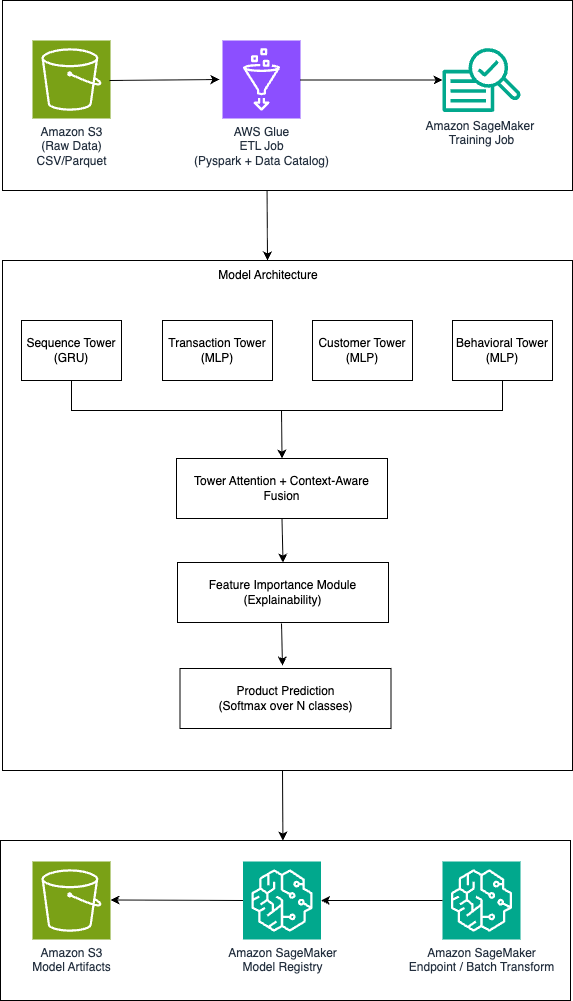
AWS details an architecture for an explainable next-best-product recommendation system tailored to banking, using Amazon SageMaker AI and PyTorch. A multi-tower neural network with learned attention provides per-customer recommendations while meeting banking regulators' explainability requirements. The post covers key design decisions for balancing accuracy with interpretability.
See more
This article explores a cascading LLM architecture for RAG generation, starting from inexpensive local models and escalating to a hosted flagship model when needed. It examines the approach from two angles: cost efficiency and a validation loop to ensure output quality. The author benchmarks twenty local models against a hosted flagship to demonstrate real-world trade-offs.
See more
A VentureBeat survey of 157 enterprises reveals a critical agent evaluation gap: 50% have shipped AI agents that passed internal evaluations but then failed in production, and only 5% fully trust automated evaluation today. Despite this, 66% already allow or are engineering toward zero-human-in-the-loop deployment for low-risk agents. The core problem is not evaluation coverage but reality alignment — evaluations pass agents that fail real customers, and autonomy is scaling faster than assurance.
See more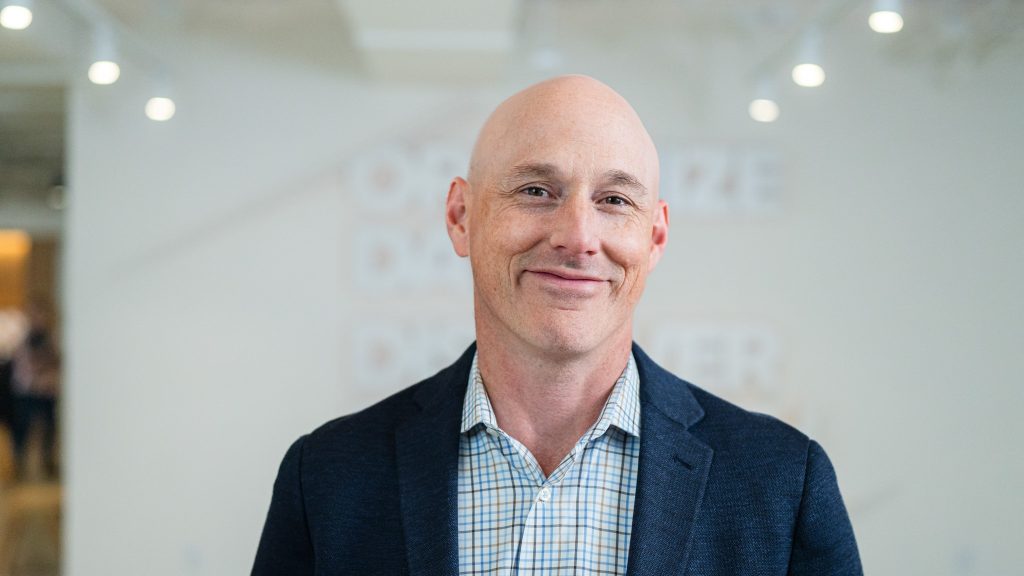
Relativity's newly appointed president Chris Brown discusses the company's acquisition of Gavel and its strategic decision to integrate Claude into its product ecosystem. He highlights the rapid growth of aiR, Relativity's AI-powered review product, as a key revenue and adoption driver. The interview covers product strategy, marketing realignment, and how generative AI is reshaping the legal e-discovery market.
See more